
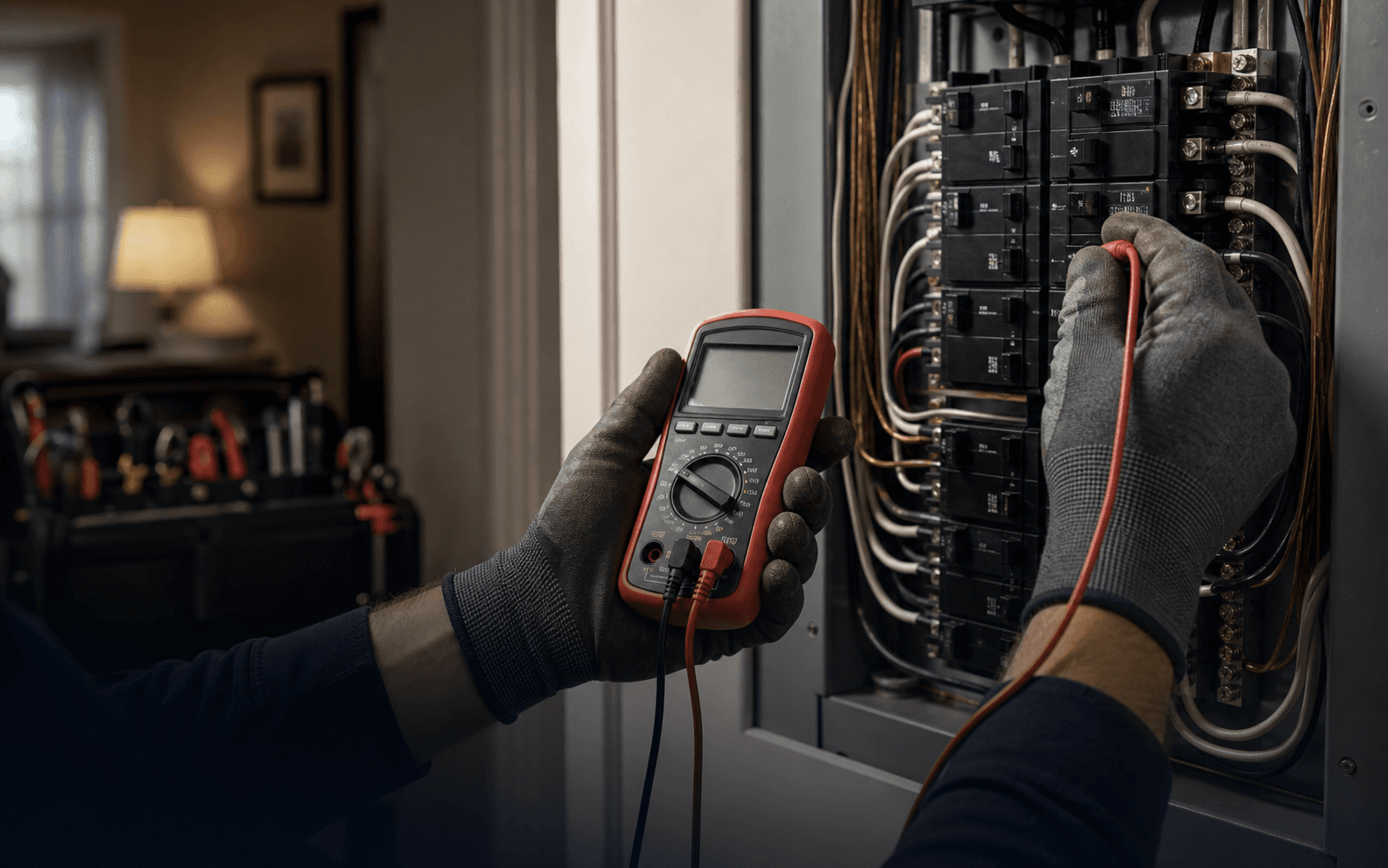
rental electrical safety guidance from Uncle Sam's Electric in Waco, Texas
Guide

Electrical Safety for Landlords

Rental electrical work should reduce repeat calls, document repairs, and prioritize safety devices tenants rely on. This guide is for landlords, property managers, and investors and focuses on turnover inspection, gFCI tests, and panel labels.

What decides the rental electrical safety plan

Rental electrical work should reduce repeat calls, document repairs, and prioritize safety devices tenants rely on.

The useful inputs are turnover inspection, gFCI tests, panel labels, smoke/CO alarms, tenant-reported issues; together they determine whether the job is a repair, an equipment installation, a new circuit, or a larger service question.

The rental electrical safety mistake to avoid

Quick cosmetic fixes can leave unsafe outlets, missing GFCIs, or overloaded circuits in place.

For landlords, property managers, and investors, that is the detail to resolve before price, equipment, or finish choices lock the project into the wrong scope.

How to get a usable rental electrical safety scope

Start with turnover inspection and gFCI tests.

Then confirm panel labels, smoke/CO alarms, and tenant-reported issues.

A useful estimate should say which of those items are confirmed, which need field verification, and what the finished work will include.

Electrical Safety for Landlords: planning notes

01

Turnover inspection

Start with turnover inspection. For rental electrical safety, this establishes the baseline and keeps the scope from being built on an assumption.

02

GFCI tests

Document gFCI tests with a photo or model number when it is safe to do so. It can change equipment selection, access, and labor for rental electrical safety.

03

Panel labels

Confirm panel labels before materials are ordered. This is one of the details that can turn a straightforward rental electrical safety job into a panel, feeder, or inspection question.

04

Smoke/CO alarms

Ask how smoke/CO alarms affects the written estimate. The answer should identify what is included, what still needs field verification, and who handles any coordination.

05

Tenant-reported issues

Keep tenant-reported issues in the final walkthrough. For landlords, property managers, and investors, it is a practical check that the finished work matches the reason the project started.
How we work

Same process, every job.

Whether it's a buzzing outlet or a 200-amp service, the order of operations doesn't change.

  1. 01

    Pick up the phone.

    A real human in Waco — not a call center. We'll diagnose over the phone if we can, schedule if we can't.

  2. 02

    Walk the job, in writing.

    On-site assessment with a written, line-item estimate. No vague 'time and materials.' No surprises on the invoice.

  3. 03

    Pull the permit.

    Every panel, service, and structural circuit gets permitted and inspected. It's slower. It's right.

  4. 04

    Run it like our own house.

    Square boxes. Labeled wires. Vacuumed drywall. Photographs in a closeout PDF. The way it should look.

  5. 05

    Stand behind it.

    Two-year workmanship warranty on everything we touch. One call brings us back. No paperwork.

  6. Warranty

    Two years on workmanship. One call brings us back.

Common questions

Asked often, answered straight.

What should I check first for rental electrical safety?

Rental electrical work should reduce repeat calls, document repairs, and prioritize safety devices tenants rely on.

Start with turnover inspection, because it establishes the existing condition before equipment, pricing, or installation choices are made.

What is the biggest rental electrical safety warning sign?

Quick cosmetic fixes can leave unsafe outlets, missing GFCIs, or overloaded circuits in place.

Stop and get a qualified assessment when the condition involves heat, arcing, damaged permanent wiring, water exposure, or equipment that cannot be safely isolated.

What should I have ready when I call?

For rental electrical safety, the useful details are: turnover inspection, gFCI tests, panel labels, smoke/CO alarms, tenant-reported issues.

A photo of your panel with the door open (don't remove any covers) plus equipment model numbers gets you a much more accurate first conversation.

Ready when you are

One call.
We bring the truck.

Estimates are free and in writing. Diagnostics are flat-rate, so you know the cost before we start looking. And emergency dispatch runs around the clock, every day of the year.

  • HoursMon–Fri · 7:00–18:00
  • SaturdaySat · 8:00–14:00
  • Emergency24 / 7 Emergency Dispatch
  • Address1274 Buster Chatham Rd, Waco, TX 76705
  • LicenseTECL 40891